The practical answer.
Cold-weather charge permission must come from the exact battery manufacturer's temperature-and-current envelope. A low discharge-temperature rating does not authorize charging at that temperature. The system must know the relevant battery temperature, enforce any restriction across all charge sources, and use an approved warm-up and restart strategy if heating is part of the product.
- Specify charging and discharging temperature limits separately.
- A heater feature does not by itself establish charging readiness.
- Keep cold-start availability and mission energy as separate purchasing requirements.
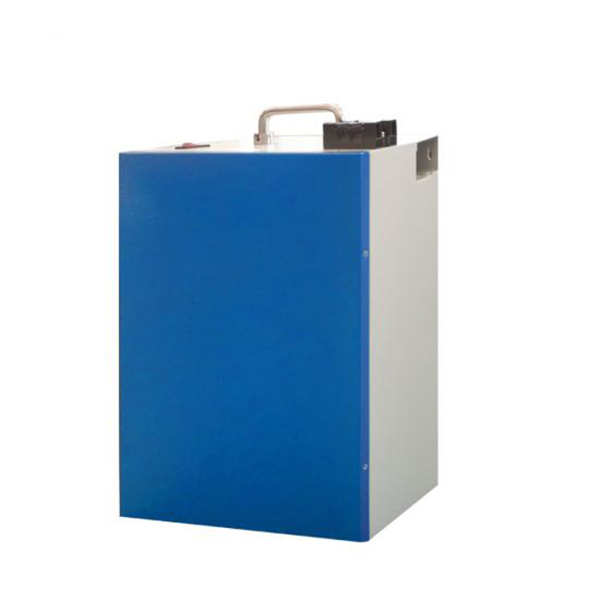
Ask for a temperature-current envelope, not an operating range headline
A broad operating-temperature statement can combine conditions that mean different things. Storage, discharge and charge are separate states. A battery may power equipment in cold weather while correctly refusing incoming charge. Ask the supplier to state charging permission and any current reduction across temperature, together with the relevant sensor and tolerance. Do not infer charging capability from a discharge curve or an enclosure's environmental rating.
Victron's Lithium NG manual gives a product-specific example: it allows charging only from +5 to +50 degrees Celsius and adds current restrictions in parts of that range. These limits demonstrate why a single generic freezing-point rule is inadequate. They apply to that named family, not every LiFePO4 pack. Obtain the actual limits for the battery under evaluation.
Define the battery state after a cold soak
An outdoor enclosure and the cells inside it do not necessarily warm at the same rate. A pack brought into a warmer room may still contain colder regions, while a sensor mounted near electronics can warm sooner than the cell mass. Request the supplier's sensor-location rationale and the method used to establish that the limiting temperature is represented. Do not replace that evidence with an ambient reading from the charger.
Describe the expected sequence: storage or operation in the cold, movement to the charging location, the available power source and the required ready time. Include condensation and installation conditions in the responsible system review. The resulting requirement is more useful than asking for a battery that works in winter without defining where it starts or what it must do next.
| Question | Evidence that makes the answer useful |
|---|---|
| Which temperature governs charging? | Sensor location, tolerance and relationship to the limiting cell condition |
| How is charge prevented when prohibited? | Approved control path and failure response for every source |
| Is heating included? | Model-specific heater function, power source and restrictions |
| When can charging restart? | Approved readiness criteria and sequence |
| What availability is promised? | Defined cold-soak state, warm-up conditions and validation evidence |
Keep heating energy and charging energy in separate accounts
If a battery includes an approved heating arrangement, establish whether the heater is powered by the charger, the battery or another source. Battery-powered heating consumes energy that is then unavailable for the mission. Charger-powered heating can reduce the power available for charging or alter the time until the pack is ready. A statement that a pack has a heater does not quantify either effect.
For an original illustrative calculation, a 20 W heater operating for 30 minutes consumes 10 Wh at its own input. That arithmetic does not predict the time needed to warm a real pack; heat loss, cell mass, starting temperature and control logic all matter. It simply shows why heating belongs in the energy and availability budget. Obtain measured or otherwise justified warm-up evidence for the specified installation instead of scaling this example into a design.
Do not add improvised heating or override a low-temperature charge interlock based on a general article. The heating arrangement, protective behavior and charging sequence need to be part of the approved product and system design.
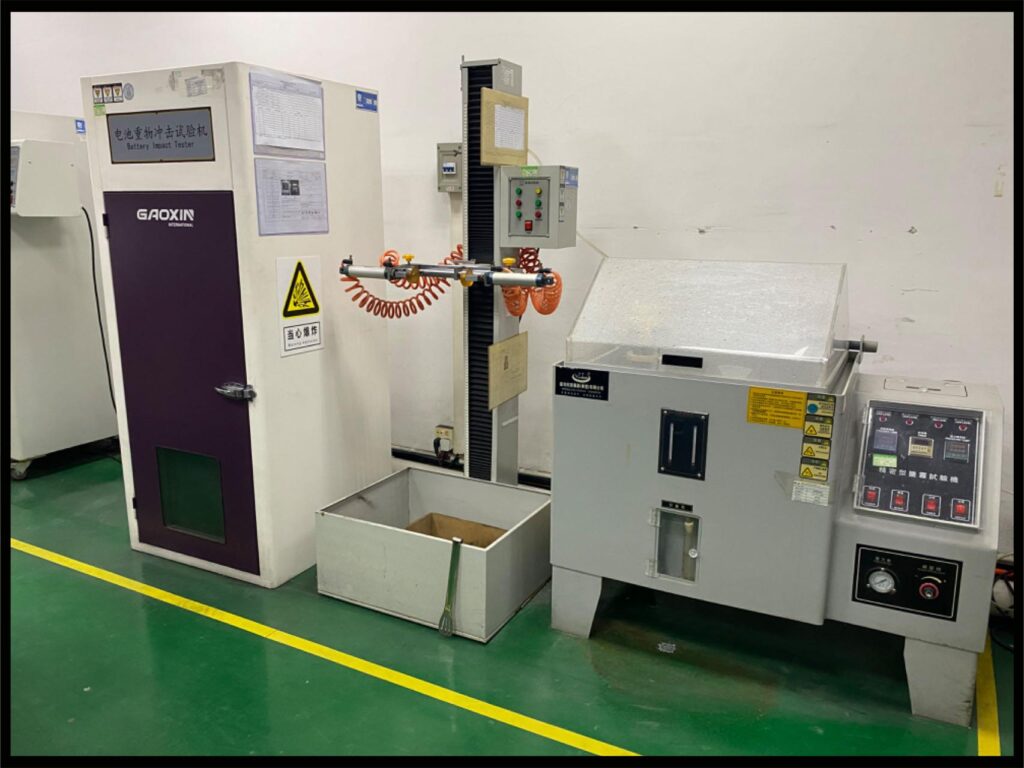
Review permission loss and recovery across every charge path
List the charging sources actually connected to the equipment. A service charger, an onboard charger and a regenerative source may require different controls. The responsible engineer should establish how each source responds when charge is prohibited. A working command to one charger does not establish coverage for an uncontrolled alternative path.
Ask what happens after a disconnected sensor, invalid temperature value, lost communication or power interruption. Then ask how the system returns to charging after an approved condition is restored. Repeated enable-disable cycling may indicate that the control sequence or thermal state has not been understood. Request event records that separate heating, waiting, charging and fault states rather than an unexplained total elapsed time.
The goal is a documented behavior contract, not a remote adjustment of protective thresholds. A supplier can explain permitted operation and recovery while retaining responsibility for the detailed protection design.
Turn winter availability into an acceptance requirement
Specify what the customer needs at a deadline: permission to begin charging, a defined stored-energy state, or readiness for a complete mission. Those are different outcomes. Include the initial charge state, cold-soak condition, enclosure installation and available supply in the agreed evaluation. Warm-up time measured with an unrestricted laboratory supply may not represent the proposed field charger.
Request a record showing relevant temperatures, incoming battery current, heater state if available, charge permission and the final ready-state criterion. The supplier should identify limits of applicability and any conditions that prevent readiness. The linked Jetray references support a concrete model inquiry; they do not imply that a heater or cold-charge feature is included. Ask for the current approved options before specifying either.
- Write the cold-start sequence and required ready outcome.
- Obtain model-specific charge permission and sensor requirements.
- Account for heating power and energy if the approved design includes it.
- Validate the actual charger, controls and installation as a combination.
Cold-charge questions answered directly
Does a discharge rating below zero authorize charging there?
No. Use the separate approved charge envelope. A discharge-temperature claim does not describe the permitted charging current, sensor logic or readiness criteria.
Is reaching a warm enclosure temperature enough?
Only if the approved design establishes that the measurement represents the limiting battery condition. Ask for the sensor rationale and validation conditions. An external temperature observation alone cannot establish that every relevant internal region is ready for charge.
Sources & further reading
- Victron: Lithium NG 12.8 V battery operating conditions ↗
- Victron: Lithium Smart technical data with separate charge and discharge conditions ↗
- Jetray: LiFePO4 battery pack references ↗
- Jetray: corporate factory photograph source ↗
AI-assisted editorial content fact-checked against linked manufacturer documentation. Heating arithmetic is illustrative, not warm-up validation. No heater, low-temperature charge capability or completed environmental test is attributed to a Jetray reference without model-specific evidence.
Prepared for the lifepo4 battery packs collection. General engineering guidance does not replace a model-specific datasheet or application validation. Source review: 5 November 2026.