The practical answer.
Approve a LiFePO4 charger against the exact finished battery model, not a chemistry label or nominal voltage alone. The review needs a normal charge profile, voltage and current tolerances, temperature-dependent permission, termination and restart behavior, and coordination with protective limits. Obtain the supplier-approved specification for the battery, charger and control interface before treating a combination as compatible.
- A family name such as 12 V, 24 V or 48 V does not define an approved charging endpoint.
- Separate routine charging targets from protective interruption limits.
- Review tolerances and transient behavior at the battery boundary.
- Manufacturer examples below belong to their named products and are not Jetray charger settings.

Replace the chemistry preset with a model-specific requirement
A charger menu that says lithium or LiFePO4 is a useful starting category, but it is not an interface approval. Packs with similar marketing voltage labels can have different internal arrangements, usable operating windows, balancing strategies and protection behavior. The purchase specification must identify the finished-pack model and revision. Do not assume that every battery sold in a 48 V category has the same nominal voltage or charging endpoint.
Ask for the approved routine charge voltage, maximum permitted charge current and the conditions attached to both. Identify whether the specification refers to voltage at the charger output, at the external battery terminal or to an internal measurement used by the controller. Cable drop during bulk charging and changing current near termination can make those boundaries behave differently. A number without its location leaves an avoidable integration ambiguity.
Keep marketing summaries separate from approved interface data. If a public page, label and supplier drawing disagree, ask the supplier to issue a reconciled controlled document before approval. Choosing the highest number from several sources does not resolve a conflict. The final comparison should state which document governs and which values remain provisional.
Define the normal profile separately from the protective boundary
The battery's protective interruption threshold is not automatically a suitable normal charging target. Routine operation should follow the supplier-approved charging profile and its tolerances. Protection exists to respond to conditions outside the intended operating envelope; repeatedly forcing the system to stop on protection can obscure whether the charger is completing a normal charge or encountering an integration problem.
Describe the charging sequence in functional terms: current-limited charging, any regulated-voltage stage, the termination condition, and what happens after the battery reaches its intended ready state. If float, periodic balancing or storage behavior is required, obtain the specific requirement rather than importing it from another manufacturer's system. The same applies to automatic restart after interruption and behavior when communication is unavailable.
As a deliberately product-specific example, Victron's Lithium Smart manual recommends a 14.2 V absorption target for its 12.8 V battery family and defines associated timing and float behavior. That illustrates how a manufacturer specifies a profile rather than merely naming a chemistry. It is not a charging instruction for a Jetray reference, and it should not be substituted into another battery's approval sheet.
Build a charging interface table with conditions and evidence
Use one row for each parameter that can change the integration decision. Include the required value or permitted range, its tolerance, the relevant operating condition and the evidence expected from the supplier. This makes it possible to compare chargers that advertise the same output voltage but differ in regulation accuracy, startup behavior or remote control.
The table below is a requirements template, not a set of settings. It intentionally leaves numerical values to the approved model specification. A useful supplier response identifies any condition it cannot meet and explains whether the gap requires a charger change, a control-interface change or additional qualification.
| Requirement | Condition to state | Evidence to request |
|---|---|---|
| Routine voltage target | Measurement boundary, tolerance and temperature | Approved battery profile and charger regulation data |
| Charge current envelope | Battery state, temperature and permitted duration | Model-specific continuous and conditional limits |
| Termination and restart | Current, time, state or control criteria | Sequence description and event record |
| Charge permission | Valid data, timeout and sensor status | Interface contract and failure response |
| Protection coordination | Normal operation versus abnormal interruption | Reviewed system behavior without bypassing safeguards |
| Post-charge state | Float, storage or disconnected operation if applicable | Battery manufacturer's explicit instruction |
Assess tolerance at the battery, including changing operating states
A nominal output setting is only one part of the delivered voltage. Charger regulation tolerance, sense location, cable effects and transient response contribute to what the pack experiences. Request the appropriate worst-case assessment from the responsible engineers. Do not assume that subtracting one advertised tolerance from another proves adequate margin; the assumptions about simultaneous conditions and measurement location must be explicit.
Review startup, loss of mains, reconnection, load sharing and the point where charging current tapers. If a host load operates while charging, the charger output current is not necessarily the current entering the battery. That difference can affect any termination logic based on current. Specify whether the charger observes its own output, a battery sensor or a communicated value, and define the expected behavior when the load changes.
For example, an instrument may operate a cooling fan during charge and switch it off near the ready state. The resulting current change is a system event to review, not evidence that the battery itself suddenly accepted less charge. Keeping battery current and auxiliary demand separate makes the charge record more interpretable. This example describes a design question, not a delivered Jetray installation.
Include temperature permission and the path that enforces it
Charging and discharging need separate temperature requirements. A battery may permit discharge in conditions where charging is prohibited or restricted. State which temperature the control system uses, where the sensor is located, and what happens if the reading is invalid. Ambient temperature beside a charger is not automatically representative of the battery's coldest relevant location after a long cold soak.
Identify how permission reaches every charging source. Possibilities include an approved communication interface, a dedicated enable signal or another manufacturer-defined arrangement. The requirement should cover stale data, disconnected control wiring and restart after temperature returns to an allowed range. The supplier must establish the actual architecture; a general article cannot authorize a wiring arrangement or a new protection threshold.
Where a product includes heating, obtain a separate description of heating power, energy source, sensor logic and charge enablement. A warm enclosure reading alone does not establish that all relevant cells have reached an approved charging state. The low-temperature article in this batch develops this question further without treating heating as a universal feature.
Treat charger completion, balancing and readiness as different states
A charger can enter its completion state without proving that an unfamiliar battery has met every project requirement. The pack may need a particular balancing opportunity or control sequence, while the host may need sufficient energy to complete a defined next mission. Ask the supplier to explain how these states are recognized and which are visible to the equipment. Avoid assuming that an LED means the same thing across different charger models.
Balancing requirements are also design-specific. Do not copy a balancing duration, voltage or current from a different manufacturer's manual. Instead, request the approved relationship between normal charging, balancing and ready-state indication for the exact pack. If the host deliberately limits charge for a service strategy, assess the implications with the supplier rather than assuming a partial-charge setting is universally beneficial.
Record the initial condition used in qualification. A trial beginning with an already balanced, partly charged sample does not cover every permitted return-to-service state. Agree representative starting conditions within the approved envelope and retain any restrictions. This keeps a successful demonstration from being generalized beyond the evidence.
Make qualification evidence useful for later changes
The acceptance report should identify the battery model, cell or assembly revision where disclosed, BMS configuration identity, charger hardware and firmware, harness and host software. Capture the approved profile together with actual battery voltage, battery current, temperature and state transitions. The report should explain interruptions and restarts rather than hiding them inside an average charge-time figure.
Separate reference charging checks from abnormal-condition verification. Work involving protection behavior belongs to a qualified test plan with suitable safeguards. The purchasing team can require evidence and traceability without prescribing unsafe fault creation or dismantling the pack. Agree which changes trigger review: charger firmware, voltage-sense method, battery revision or host load behavior can all be relevant.
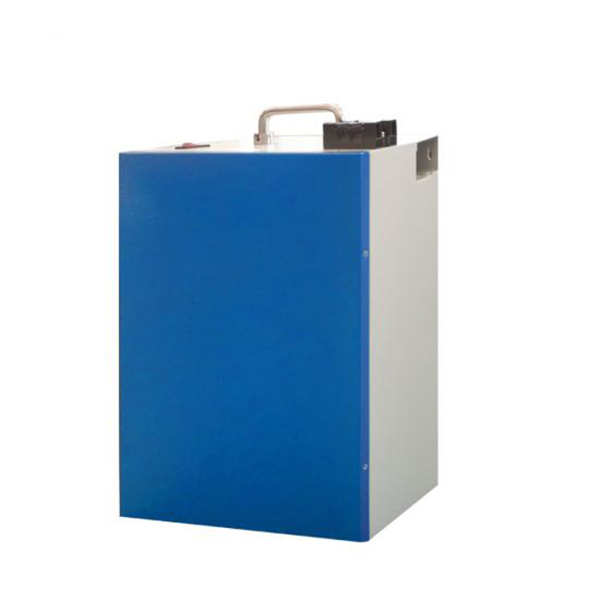
The linked Jetray LiFePO4 products are reference starting points for an inquiry. Their public category labels and photographs do not approve a charger pairing. Send the proposed charger identification and operating conditions with the inquiry and request the current model-specific document set. This produces a more actionable response than asking whether a generic lithium charger will work.
- Identify the exact battery and charger revisions.
- Obtain the approved normal profile and separate protective boundaries.
- Review voltage, current, temperature and control tolerances at named measurement points.
- Agree starting states, acceptance criteria and qualified validation responsibilities.
- Retain the approved combination and define triggers for reassessment.
Common questions about LiFePO4 charger approval
Is the highest allowed voltage the best normal target?
That conclusion does not follow. A permitted limit and a routine charging target answer different questions. Use the manufacturer's approved normal profile, including its tolerance and completion conditions. Resolve conflicting public values through a controlled supplier specification rather than selecting one by preference.
Can every 48 V class LiFePO4 battery share a charger?
No compatibility follows from that label alone. Confirm the actual model voltage window, charging current, control interface and protection behavior. Internal arrangement and nominal labeling must be verified rather than inferred, especially when comparing catalogs from different suppliers.
What makes a charger offer ready for purchasing approval?
The offer should name the approved battery pairing, identify applicable revisions and provide evidence against the agreed interface table. Any unverified parameter should remain a stated deviation. A chemistry preset, a successful connection or one apparently complete charge is insufficient to close the whole integration review.
Sources & further reading
- Victron: Lithium Smart Battery operation and model-specific charging profile ↗
- Victron: Lithium Smart Battery technical data ↗
- Jetray: LiFePO4 battery pack catalog ↗
AI-assisted editorial content fact-checked against the linked primary sources. Other manufacturers' examples are explicitly product-specific and are not settings for Jetray batteries. This is an approval framework, not installation instructions or an individual engineer review.
Prepared for the lifepo4 battery packs collection. General engineering guidance does not replace a model-specific datasheet or application validation. Source review: 5 November 2026.