The practical answer.
Define the unit under test, depth-of-discharge window, charge and discharge conditions, rest periods and end-of-life criteria before cycling. Set a separate reference capacity test and document whether the reported count means physical cycles or full-equivalent throughput.
- Define a cycle as a repeatable throughput unit before quoting any count; partial cycles need an explicit accumulation rule.
- The LiFePO4 voltage plateau flattens open-circuit voltage, so coulomb counting — not voltage lookup — is the workable accounting basis.
- Temperature window, charge termination and rest are controlled variables; changing one invalidates the comparison.
- An end-of-life threshold is an auditable convention, and accelerated cycling stays labelled as bench data rather than field life.
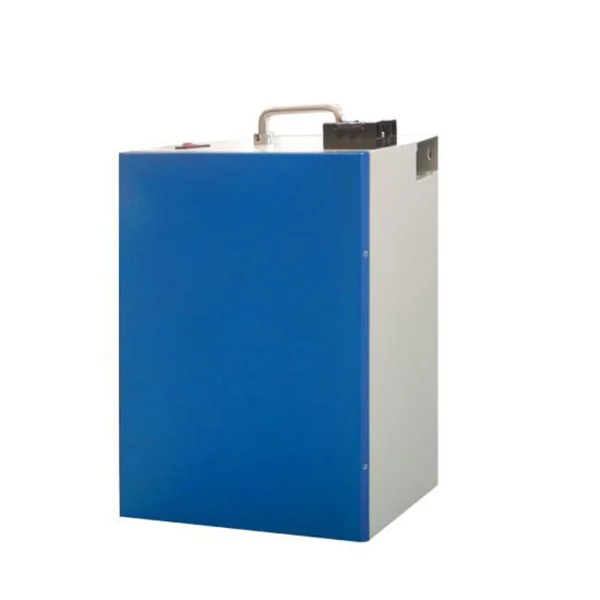
Decision context — lifepo4 cycle life test protocol definition
An engineer opens a datasheet and finds a cycle-life figure with no definition behind it. The number is quoted for a LiFePO4 battery pack, yet nothing says where a cycle starts, how deep the discharge runs, or when the test is judged complete. A LiFePO4 cycle life test protocol is the missing piece; until it is written down, two figures from different labs cannot be compared.
The conflict surfaces during specification review, when someone asks why one figure looks better than another. By then the conditions are baked into both claims. Fixing the definition first costs a meeting; unwinding it after a design freeze costs a redesign.
Cycle-life protocol worksheet
| Protocol field | Required declaration | Record to preserve |
|---|---|---|
| Sample identity | Model, hardware and firmware revision, lot, sample count | Baseline capacity and build configuration |
| Cycling recipe | Rates, upper and lower limits, temperature, rest and termination conditions | Logged Ah or Wh, cycle convention and interruptions |
| Reference performance check | Separate reproducible capacity test and repeat interval | Each capacity result and actual test conditions |
| Stopping and reporting | Retention criterion, any separately specified power criterion and exclusions | Reason and point of completion for each sample |
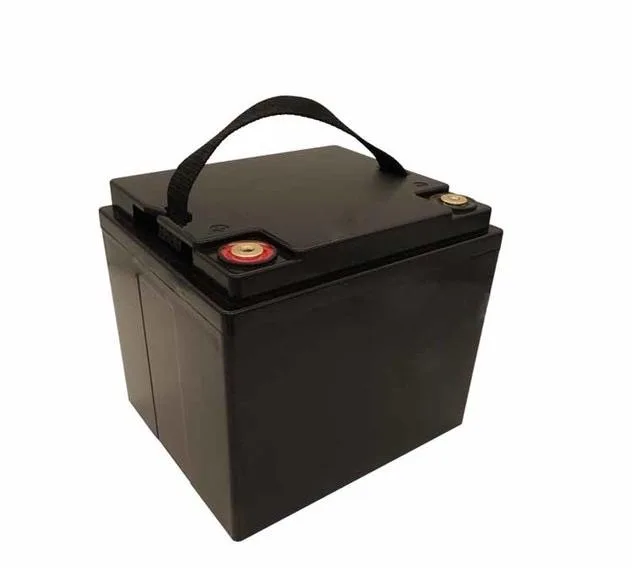
What counts as one cycle in a LiFePO4 test protocol
A LiFePO4 cycle life test protocol starts with one decision: what gets counted. A cycle is an accounting unit before it is a physical event, so start point, end point and integrated quantity are named together.
Defining a full equivalent cycle from charge and discharge throughput
One declared convention is to divide cumulative discharge ampere-hours by an agreed reference capacity. Keep that throughput count separate from the number of charge-discharge events. Partial cycles convert by summing discharged ampere-hours and dividing by the reference capacity. The boundaries are definitions, not landmarks: "full" means charged to the agreed termination and rested, and the lower boundary is a chosen cutoff, not an empty cell. Both sides must also decide whether charge throughput counts toward the tally or only discharge throughput, because passive balancing on the return leg moves charge that never reaches the load.
Coulomb counting as the reference accounting method
On a LiFePO4 cell, open-circuit voltage stays nearly flat across most of the state-of-charge range, so a small voltage error maps onto a large state-of-charge error. Coulomb integration is the workable alternative once the integration interval and re-referencing rule are fixed. BMS topology decides where the current sensor sits and whether accumulated charge is logged; balancing strategy decides when the reference shifts.
Depth of discharge and the plateau that hides capacity loss
In a LiFePO4 cycle life test protocol, depth of discharge is the span between the two boundaries against the reference capacity. The plateau is why its effect is easy to miss.
Why the OCV plateau defeats voltage-based state estimation
The flat two-phase plateau of LiFePO4 delivers a large fraction of capacity inside a narrow voltage band. Terminal voltage also reflects impedance and temperature, so sag cannot be read as a capacity signal. Capacity checks therefore need a defined discharge at a fixed rate to a fixed cutoff, preceded by a defined rest, with the result integrated rather than estimated.
Mapping depth of discharge windows to cumulative throughput
A common situation in engineering is a bench team that wants to shorten a verification run by cycling across a shallow mid-plateau window, while field duty swings across a much wider depth of discharge. What the review has to settle is whether the shortened window is presented as an accelerated proxy or as a description of actual duty. Because the plateau hides the difference, both runs can look identical on a voltage trace while accumulating very different throughput. The protocol must name the window, state the rate, and record ampere-hours instead of elapsed time. A shallow window also leaves the BMS with little voltage information to correct drift, so the balancing strategy and re-referencing interval carry more of the accounting burden.
Temperature and charge termination as controlled variables
Once the cycle is defined, everything else must be held still. Temperature and termination are the two variables most often treated as background conditions.
Holding the temperature window fixed across the whole sequence
A defined temperature window states where temperature is measured — cell surface, tab, or chamber air — the soak time before a cycle, and the acceptable cell-to-cell gradient. A gradient matters because the warmest cells do not age on the same path as the coolest, and the weakest cell governs the pack. Temperature also moves the plateau slightly and changes how the charge tail behaves. If a run drifts outside the window, mark those cycles and report them separately rather than folding them into the average.
Charge termination and the taper tail as a test boundary
The LiFePO4 charge curve ends with a constant-voltage taper, and "full" is where that taper is judged complete. A termination rule may use a current threshold, a timer, or both, but it must be identical on every cycle; loosen it and the reference capacity creeps upward. BMS topology decides which device enforces the rule, so the protocol must name the authoritative record and the handover point. Rest between charge and discharge belongs in the same clause.
End-of-life criteria that both sides can audit
A cycle count only means something against a stopping rule. End of life is a threshold both parties agree to read from a defined measurement.
Separating capacity fade from impedance growth
Capacity retention and power capability do not decline in lockstep. A pack can still deliver the agreed capacity and fail a load step because impedance has grown, so the specification should state which measure governs and preferably bound both. That follows directly from the voltage plateau and the balancing strategy. The weakest cell governs the pack, not the average cell: divergence stays invisible in pack voltage until one cell reaches a boundary early, so the check needs a per-cell view.
Auditable records a reviewer can reconstruct
An auditable run is one a reviewer can rebuild from logs: per-cycle throughput, the temperature trace, the termination rule, rest durations, balancing events, and each scheduled capacity-check result. The acceptance limit is to be confirmed per project, not assumed from a generic figure.
Why accelerated cycling cannot substitute for a field profile
Acceleration is useful for screening. It is not a substitute for the duty the equipment actually sees, and presenting it as such is the most common way a LiFePO4 cycle life test protocol gets misused.
Why elevated-rate acceleration distorts the ageing path
Raising the rate, deepening the window, or widening the temperature window speeds up throughput but changes which ageing mechanisms dominate. Calendar-driven and cycle-driven effects do not scale together, and the plateau gives no warning that the balance shifted. Two runs with the same accumulated throughput can represent different physical states. The honest label is a comparative bench result under fixed conditions; it ranks configurations, not field life.
Translating a bench profile into a field duty profile
A field duty profile is a distribution: temperature windows across seasons, partial cycles, rest periods, recharge opportunities, and BMS balancing events. Mapping a bench result onto it requires recording that profile first, then reproducing it as a test sequence. If your team is choosing between a screening run and a field-representative sequence, +86 13924645656 connects you to the engineers who set up the profile.
FAQ — lifepo4 cycle life test protocol definition
How should partial cycles be counted in a LiFePO4 cycle life test protocol?
Convert them into full equivalent cycles: sum discharged ampere-hours and divide by the reference capacity. State whether charge throughput is included and fix the re-referencing rule, otherwise the tally drifts with the balancing strategy.
Can voltage be used to verify capacity on the LiFePO4 plateau?
Not as a primary measure. Open-circuit voltage is too flat, and load-dependent sag adds ambiguity. Verification needs an integrated discharge at a fixed rate, temperature window and termination, preceded by a defined rest.
Does an accelerated cycling result predict field service life?
No. Acceleration changes the balance of ageing mechanisms and rarely reproduces the rest and temperature distribution of real duty. A LiFePO4 cycle life test protocol should classify it as comparative bench data; a field claim needs a recorded duty profile.
What records make a cycle-life claim auditable?
Per-cycle throughput, the temperature trace with measurement locations, the termination rule, rest durations, balancing events, and each capacity-check result. State whether the BMS or the bench supply is authoritative for each logged quantity.
Conclusion — lifepo4 cycle life test protocol definition
A defensible figure is a chain of definitions, not a single number. Agree on what a cycle is, anchor accounting in coulomb counting because the voltage plateau hides state of charge, freeze the temperature window and charge termination, and write an end-of-life threshold a reviewer can rebuild from logs. Keep accelerated results in their own lane.
Draft the protocol before asking anyone for a cycle-life number, and leave the acceptance limit to be confirmed per project. A LiFePO4 cycle life test protocol written this early turns a contested claim into a shared specification — and shared specifications survive design reviews.
Request an RFQ for Your Battery Pack Project — lifepo4 cycle life test protocol definition
Sources & further reading
- Sandia research on cycling-condition effects in commercial cells ↗
- PNNL measured energy storage system performance and SOC observations ↗
- Victron Lithium NG model technical data, test and operating conditions ↗
- Jetray LiFePO4 pack family ↗
Prepared for the lifepo4 battery packs collection. General engineering guidance does not replace a model-specific datasheet or application validation. Source review: 9 November 2026.